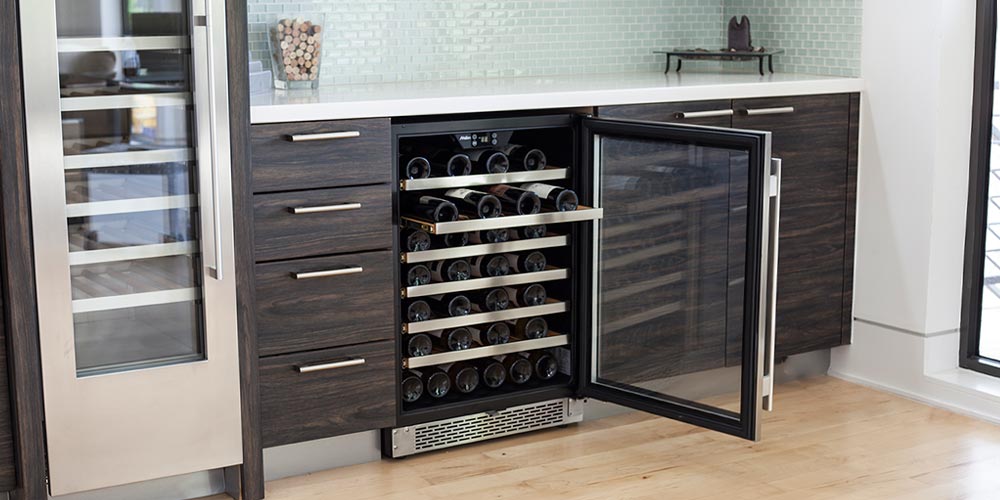
Wine coolers can use different cooling systems. Thermoelectric technology is common in compact models; compressor models predominate in other capacities and installation types. Your choice depends on the space, ambient temperature and intended use.
How does a thermoelectric wine cooler work?
A thermoelectric wine cooler uses an electrical module to transfer heat, usually with fans to dissipate it and circulate air. It has no compressor, so it may produce fewer mechanical vibrations. However, its cooling capacity depends heavily on ambient temperature and ventilation conditions. Always check the range specified by the manufacturer.
How does a compressor wine cooler work?
The compressor circulates refrigerant through the cooling circuit. This technology generally offers greater cooling capacity and is available in models of various sizes, including high-capacity wine coolers. Noise, consumption and vibrations vary considerably between models; compare technical specifications rather than assuming they all perform the same way.
What should you compare before buying?
- Installation location: check the required clearances and whether the model is suitable for built-in installation.
- Ambient temperature: check the climate class and stated performance.
- Capacity and zones: choose sufficient space for your collection and the way you serve wine.
- Noise and efficiency: compare each product's specific values.
If you have questions, tell us where you want to install your wine cooler and how many bottles you wish to store. We will help you compare models suitable for your needs.