Good wine storage depends on stability. To understand how much electricity a wine cooler uses, start with the annual consumption shown on the energy label for the specific model. Together with the price per kWh on your electricity bill, this helps you estimate running costs and choose with confidence.
How much electricity does a wine cooler use?
There is no single consumption figure for all wine coolers. Capacity, insulation, cooling technology, temperature settings and installation conditions affect the energy needed to store your bottles.
The most useful figure for comparing models is annual consumption in kWh/year, shown on the energy label and product information sheet. This figure is measured under standardised test conditions: it allows comparisons, but actual consumption in your home may differ.
A small wine cooler does not necessarily use less electricity than every larger model. Likewise, the number of temperature zones or installation type alone cannot tell you how much energy it uses. Always compare the figures for the specific appliances.
How to calculate electricity costs
To estimate annual running costs, multiply the consumption on the label by the price you pay for each kWh:
Estimated annual cost = annual consumption (kWh/year) × electricity price (€/kWh)
For example, consider a wine cooler with hypothetical consumption of 120 kWh/year and an electricity price of €0.25/kWh:
- Estimated annual cost: 120 × €0.25 = €30.
- Estimated monthly average: €30 ÷ 12 = €2.50.
- Estimated average daily consumption: 120 ÷ 365 ≈ 0.33 kWh.
This example simply illustrates the calculation. It does not represent a particular model, a current electricity tariff in Portugal or a guaranteed running cost. Replace both figures with the product data and the rate in your own contract.
If you have a two-rate or three-rate tariff, costs depend on how consumption is distributed across the different periods. A wine cooler remains connected throughout the day, so you should not calculate all its consumption using only the off-peak rate.
This calculation estimates the cost of the electricity used by the appliance. It excludes fixed charges, such as contracted power charges. The result also depends on whether your chosen price per kWh includes taxes and other variable charges.
Power in watts is different from annual consumption
A watt rating describes electrical power in a particular operating context. It is not annual energy consumption: the compressor switches on and off according to cooling demand, and other components can also use electricity.
Multiplying rated power by 24 hours and 365 days can give a misleading estimate. Use the label's kWh/year figure to compare appliances. To measure actual consumption, you can use a compatible energy meter over a representative period, following its safety instructions.
How to read a wine cooler energy label
The label brings together useful information about the appliance. Look at these four details:
- Annual consumption: energy expressed in kWh/year.
- Energy efficiency class: position on the A to G scale.
- Capacity: number of bottles specified for the appliance.
- Noise: sound emissions in decibels and the noise emission class.
The QR code provides access to additional model information in the European EPREL database. Also check the technical specifications and manual before buying.

Does a lower energy class always mean high running costs?
The letter indicates efficiency under the classification criteria, but it does not tell you the annual cost on its own. To estimate this, check kWh/year and apply the price in your electricity contract.
A larger appliance can have a better class yet still use more electricity overall than a small appliance. Compare wine coolers with similar capacity and features, taking your intended use into account.
What affects a wine cooler's electricity consumption?
Capacity and appliance construction
Internal volume, insulation, the door, seals and cooling system all influence performance. Choose a capacity that suits your collection and its likely growth, rather than relying solely on the advertised bottle count.
Temperature setting
A larger difference between room temperature and the desired internal temperature can increase cooling demand. Avoid selecting a lower temperature than your wines require.
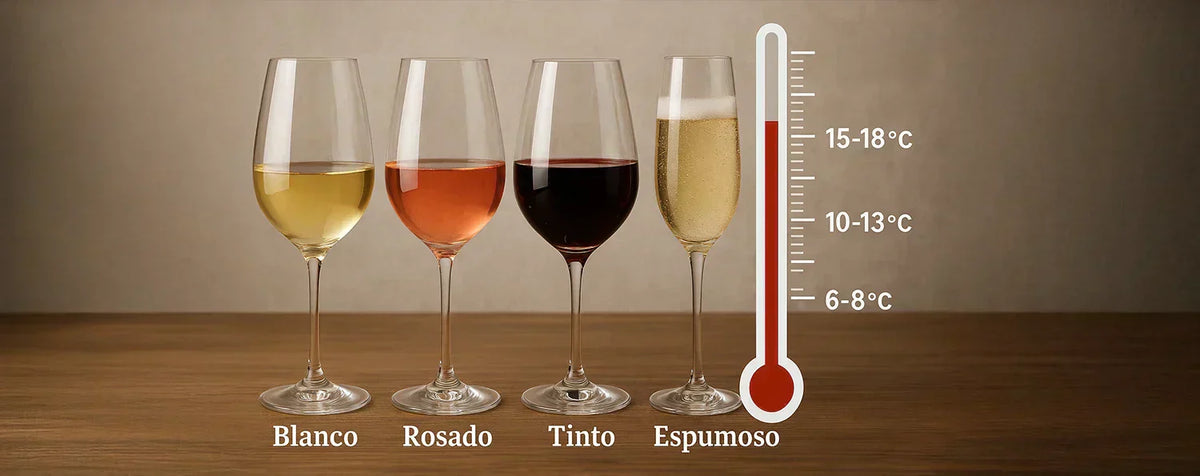
Storing wine and preparing it to serve are different goals. A dual-zone wine cooler can be useful when you want to keep groups of bottles at different temperatures. Read our guide to the ideal serving temperature for each type of wine.
Ambient temperature and climate class
A hot kitchen in summer, a sun-exposed enclosed balcony or a garage with large temperature changes may not provide suitable conditions. Check the manufacturer's permitted ambient temperature range: this is different from the internal temperature adjustment range.
The model's climate class and environmental limits help establish whether it suits your chosen room. Staying within those limits does not remove the need for adequate ventilation.
Ventilation and installation type
The wine cooler needs to release heat extracted from its interior. Blocked air inlets or outlets can make the system work harder and reduce cooling performance.
A freestanding model should not be installed inside a closed cabinet unless the manufacturer expressly permits it. With built-in models, follow the installation diagram for ventilation grilles and air routes.
There is no universal ventilation clearance. Check the appliance dimensions, recess dimensions and model-specific manual. Find further guidance in where to install a wine cooler.
Door openings and adding bottles
Opening the door frequently or leaving it open for long periods lets warmer air enter. Adding several bottles at room temperature can also temporarily increase cooling demand until their temperature stabilises.
Does a dual-zone wine cooler use more electricity?
The number of zones alone cannot answer this. Maintaining two different temperatures can involve different thermal management, but the appliance's construction, size and efficiency also matter.
Compare annual consumption for similar models and choose according to your needs. One zone may be enough for storing a collection at a uniform temperature. Two zones can be more convenient if you want different wines ready to serve.
How to save energy while caring for your wine
- Choose a model that suits the space. Confirm whether you need a freestanding or built-in appliance before buying.
- Keep ventilation clear. Follow the manufacturer's installation diagram and do not cover the grilles.
- Avoid heat sources and direct sunlight. Choose a room with suitable ambient conditions.
- Set a temperature that suits your purpose. Do not cool more than necessary.
- Keep door openings brief. Organise bottles so they are easy to find.
- Check the seals. A properly closed door helps limit warm air entering.
- Follow the manual's maintenance instructions. Clean accessible parts as directed without dismantling electrical components.
- Compare kWh/year before buying. Also consider capacity, noise, installation and suitability for your collection.
Should I switch the wine cooler off to save energy?
If it contains wine you want to store, it is best to keep it connected and correctly set. Switching it off and on every day, or simply according to tariff periods, interrupts temperature control.
If the appliance will be empty and unused for an extended period, follow the manufacturer's instructions for switching it off, cleaning it and leaving the door in the recommended position. Energy saving should reflect actual use while preserving the conditions your wine needs.
Frequently asked questions about wine cooler consumption
Does a wine cooler use a lot of electricity?
It depends on the model and operating conditions. Check consumption in kWh/year and multiply it by the price per kWh in your contract to estimate the cost.
What does it cost to run a wine cooler each month?
Divide the estimated annual cost by 12. This average does not necessarily represent each month's consumption, which can vary with ambient temperature and use.
Does a built-in wine cooler use more electricity than a freestanding model?
Installation type alone does not determine consumption. Compare the models' kWh/year figures and follow each appliance's ventilation requirements.
Does a thermoelectric wine cooler use less electricity than a compressor model?
Not necessarily. Technology alone does not establish which uses less electricity. Compare the declared annual consumption of appliances suitable for the same purpose. Learn more about thermoelectric and compressor wine coolers.
Can I switch it off when electricity is more expensive?
If you store wine inside, interrupting temperature control every day to follow tariff periods is not advisable. Improving installation and setting the appliance appropriately are preferable.
Does filling a wine cooler increase consumption?
Adding many room-temperature bottles can temporarily increase cooling demand. Once stabilised, bottles help buffer temperature changes. Do not exceed capacity or obstruct the airflow specified in the manual.
Does the compressor run continuously?
Under normal conditions, operation varies with cooling demand. If you notice a persistent change, consult the manual and check ambient temperature, ventilation and door closure before contacting support.
Where can I find the model's exact consumption?
Declared annual consumption is on the energy label and product information sheet, also available through EPREL. Actual consumption in your home can only be established by measuring it under representative conditions.
Choose your wine cooler with confidence
Your choice should balance energy consumption, capacity, acoustic comfort and installation. The ideal model provides the right conditions for your collection and your space.
At cavesdevinho.pt, you will find wine coolers for different needs and specialist advice to help compare options. Check each product's specifications and contact us if you have questions before buying.
Because storing wine means caring for every bottle's journey to your next toast.
Sources and technical information
For official information on energy labels and model data, see the European Commission's refrigeration appliance guidance and the EPREL database. Always follow the installation and maintenance instructions for your specific model.